


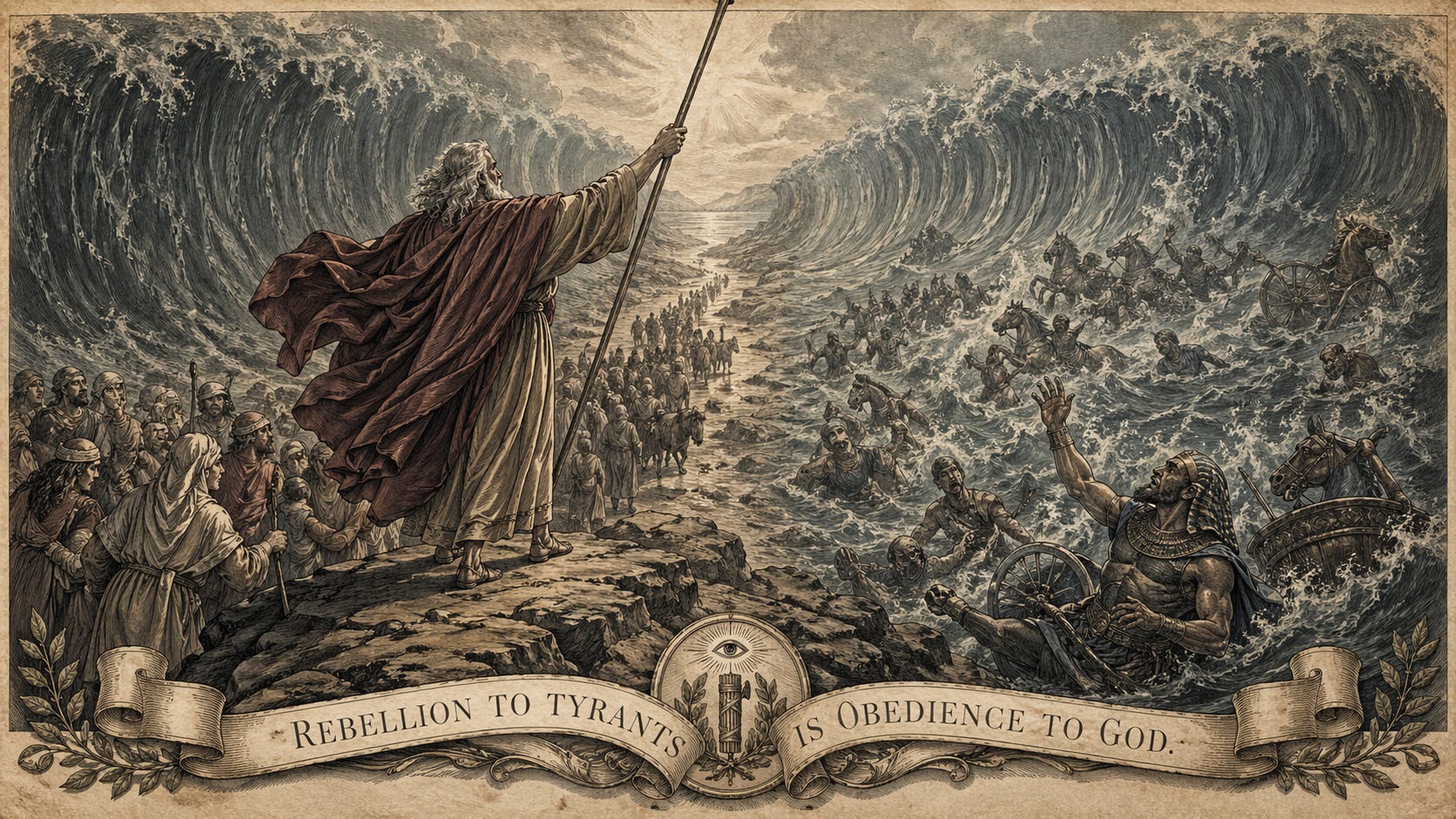
The Moral Law the Founders Inherited
The most historically precise way to describe the founders’ moral inheritance begins with a reality that the moral law they invoked came through Judaism. The ethical core that shaped founding-era thought arose from a people, a covenant, and a revealed law. It came from the God of Israel, through the covenant with Moses at Mt. Sinai, in the commandments and political theology preserved in the Jewish tradition and transmitted into the Christian traditions the founders knew best. The Declaration’s appeal to the “Laws of Nature and of Nature’s God” belongs to that broader world of higher moral order antecedent to civil power.
At the center of that inheritance stood the Ten Commandments. In theological and historical writing, the Ten Commandments are also called the Decalogue. For clarity, the point should be stated plainly: the Decalogue is the Ten Commandments. In the founding-era Protestant world, the Ten Commandments were widely taught as the clearest summary of moral law. The Westminster Shorter Catechism expressed this directly: “The moral law is summarily comprehended in the ten commandments.”
