


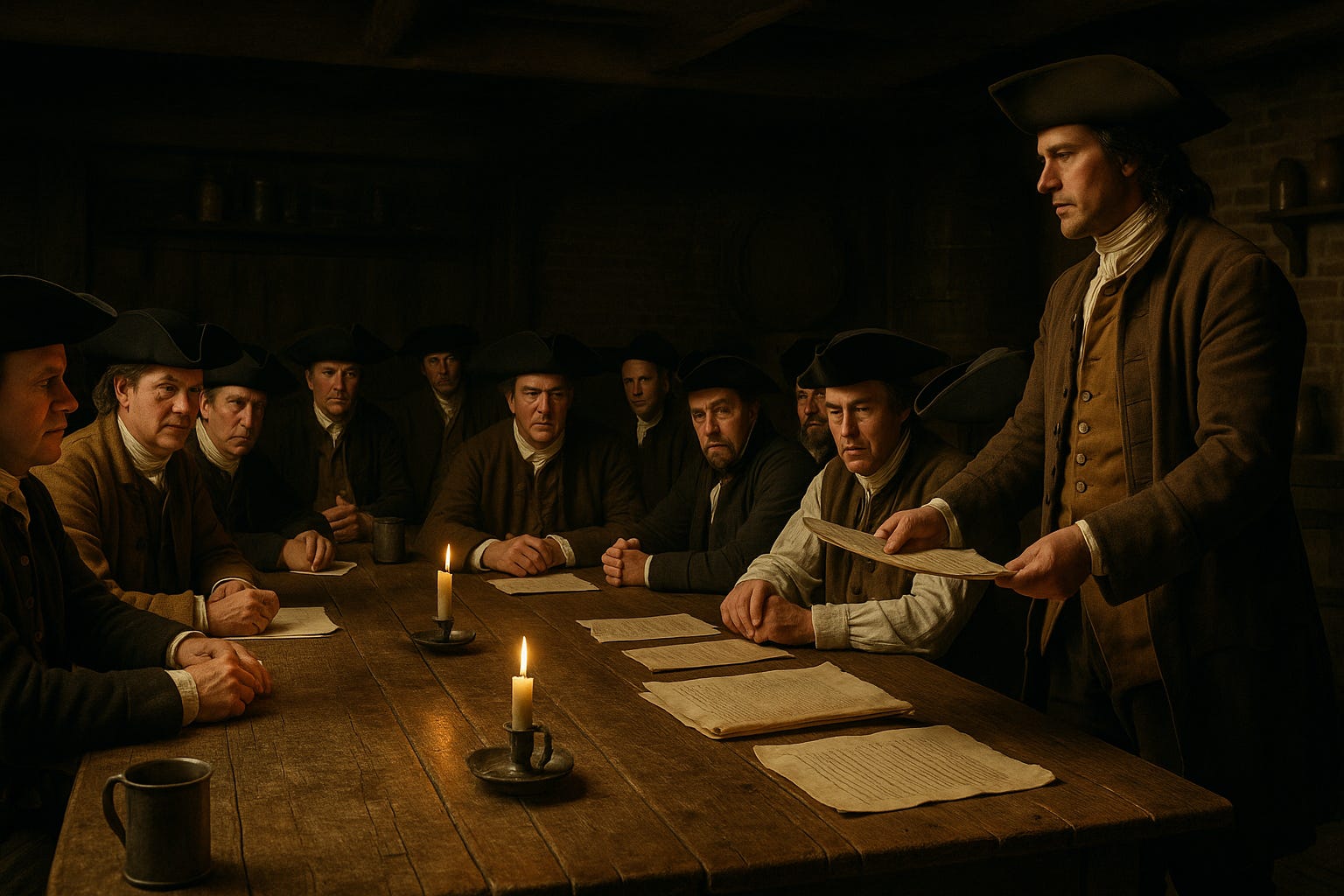
The Grand Jury in the United States
The grand jury in the United States serves as a citizen filter that screens accusations before the state can use its coercive power to prosecute. Its purpose is to ensure that liberty is preserved by requiring that an accusation be reviewed by ordinary citizens before proceeding to trial. A grand jury normally consists of 16 to 23 citizens drawn from the jury pool who serve for weeks or months at a time.
The mechanics of the process involve several structured stages:
Presentation of Evidence: Prosecutors introduce witnesses, documents, and testimony. Defense counsel is not typically present, underscoring that the proceeding is not a trial but an investigatory gateway.
Secrecy of Deliberations: Proceedings are sealed. This secrecy is designed to protect the reputation of potential defendants if no indictment is returned, to shield witnesses and jurors from outside influence, and to encourage candid testimony without fear of retaliation.
Deliberation and Voting: After reviewing the evidence, jurors discuss in private and then cast their votes. A supermajority is required to issue an indictment, often referred to as a “true bill.” Failure to reach the threshold results in a “no bill,” preventing prosecution from moving forward.
Legal Thresholds: The standard applied is probable cause, which is lower than the “beyond a reasonable doubt” standard at trial. This means jurors are only asked to decide whether enough evidence exists to justify moving to trial, not to determine guilt.
Tenure and Breadth of Jurisdiction: Grand juries often serve for extended terms and may hear multiple unrelated cases. They have investigatory powers such as issuing subpoenas, which allow them to compel testimony and documents.
This procedure is rooted in the Fifth Amendment and reflects the Founders’ design that no single faction should wield unilateral accusatory power. It also embodies the principle that citizens, not government officials alone, act as a buffer between the state’s coercive mechanisms and the liberty of the individual.
Attack Vectors and USL Governance Mapping
In practice, however, grand juries can be subject to several attack vectors that weaken their function and can be exploited by factions or powerful actors:
Prosecutorial Dominance: The imbalance of knowledge and access allows prosecutors to heavily influence what evidence jurors see, creating a risk of the grand jury acting as a rubber stamp.
Selective Leaks: Information may be deliberately leaked from the proceedings to shape public perception, discredit defendants, or intimidate witnesses, undermining the principle of secrecy.
Coercion or Bias Against Unpopular Defendants: Jurors may face social pressure, media narratives, or community bias that tilt probable cause decisions unfairly.
United States Lab’s governance model addresses these attack vectors by mapping the grand jury to a set of governance primitives designed to cryptographically enforce fairness and secrecy. The parallel begins with juror selection: rather than relying on random draws alone, we envision citizen sortition backed by verifiable randomness, ensuring that citizens are chosen fairly and unpredictably.
Each citizen’s eligibility is proven without revealing identity through zero-knowledge proofs. Jurors then vote using threshold voting mechanisms, with their ballots encrypted and validated to ensure one-person-one-vote compliance. The petit jury later serves as a second citizen filter, providing reversibility and correction if the grand jury admits a case unjustly.
This model of citizen validators fits into a larger constitutional pattern. Impeachment, treaty ratification, bicameral passage of laws, and the presidential veto are all filters against factional capture. Each protects the republic by ensuring no single actor or institution can force through outcomes unchecked.
The grand jury is one of the clearest examples of this principle because it stands directly between the prosecutorial power of the executive and the liberty of the accused citizen. USL expands this concept by treating each of these filters as modules, each with its own validator set, proofs, and challenge periods. The grand jury, as the accusatory gate, demonstrates the broader governance logic that can be applied across domains.
DOJ Agency Functions as zk-Rollups
To preserve secrecy while proving correctness, we frame the Department of Justice agency function as a zk-rollup layered beneath the public constitutional ledger. The constitutional ledger, or L1, anchors commitments and outcomes. The DOJ zk-rollup, or L2, is far more than a simple sub-layer: it functions as a dedicated privacy-preserving execution environment that manages every aspect of investigative and accusatory procedure.
Specifically, the DOJ zk-rollup:
Manages Private Casework: Each investigative file, subpoena, or witness transcript is encapsulated in cryptographically sealed records. Every modification generates a new state root inside the rollup, with validity proofs ensuring that evidence chains cannot be altered retroactively.
Produces Succinct Validity Proofs: At each critical juncture—juror impanelment, evidence presentation, deliberation close, and indictment decision—the rollup outputs zero-knowledge proofs that certify compliance with procedural rules without revealing sensitive details.
Preserves Confidential Identities: Juror identities, witness lists, and prosecutorial notes remain private within the rollup. ZK circuits guarantee that only eligible citizens serve, that each juror votes once, and that witnesses are properly summoned, all without disclosing names on the public ledger.
Anchors Commitments to L1: Only high-level commitments, state transition hashes, and challenge-period markers are posted to the constitutional ledger. This provides auditability without compromising secrecy.
The separation between L1 and L2 ensures dual guarantees: absolute secrecy for participants and evidence inside the DOJ environment, and public, mathematically verifiable assurance that the rules of due process were executed faithfully. This duality allows the system to replicate the protective function of grand jury secrecy while eliminating blind trust in officials, replacing it with cryptographic accountability.
Essential Proofs
Within this structure, several categories of proofs are essential, each serving as a cryptographic safeguard against specific attack vectors and procedural failures:
Eligibility Proofs: These demonstrate that jurors are valid citizens without revealing their identities. The circuits confirm age, residency, and uniqueness while preserving anonymity. They also enforce that no juror is serving on multiple panels simultaneously, and that disqualified persons are excluded. This prevents sybil attacks, impersonation, or improper empanelment.
Sortition Proofs: These prove that the juror pool was fairly drawn from the eligible population using verifiable randomness functions (VRFs) or beacons. They certify that selection was unpredictable and unbiased, resistant to tampering by prosecutors or administrators. Sortition proofs include nullifier checks to prevent double-drawing and ZK assurances that the random seed was generated by a publicly auditable beacon.
Sealed-Vote Proofs: These confirm that each juror’s ballot is well-formed, cast once, and encrypted correctly. They enforce one-person-one-vote and prevent coercion by allowing jurors to produce ZK proofs of valid participation without revealing how they voted. Threshold decryption or tallying is used to compute outcomes while preserving individual secrecy. Additional proofs show that abstentions, recusals, or disqualifications were handled according to rules.
Indictment Validity Proofs: These are composite proofs that verify quorum requirements, compliance with venue rules, lawful jurisdiction, and proper custody of evidence hashes. They also confirm that threshold voting conditions were met and that recusal rules or conflict-of-interest safeguards were honored. The validity proof acts as the final check that the indictment emerged from a lawful process.
Together, these proofs enable the public ledger to record that an indictment occurred according to law, without exposing sensitive information. They transform opaque procedures into verifiable claims. The system also incorporates challenge periods, during which citizens, oversight bodies, or automated auditors can submit cryptographic challenges showing process violations.
For example, a challenge could prove that an ineligible juror was seated, that quorum was not achieved, or that the sortition seed was manipulated. If valid, these challenges automatically reverse the indictment, forcing the process to be rerun with corrected parameters. This ensures that no indictment can stand without a continuous chain of verifiable, challenge-resistant proofs.
These same proof categories can be generalized to other governance contexts. Legislative passage can be validated through sortition-like quorum proofs across two chambers. Treaty ratification can use threshold and validity proofs across branches. Impeachment processes can be structured as layered ballots with sealed-vote proofs and challenge periods. By examining the grand jury in depth, we see the common language of validator sets and cryptographic proofs that can apply across the constitutional spectrum.
Secrecy and Integrity Enhancements
The secrecy enhancements extend beyond traditional practice, creating a comprehensive defense-in-depth model that protects jurors, witnesses, and evidence while still offering public assurance that all rules were followed.
Juror Pseudonymity and Audit Keys: Jurors are pseudonymous within the protocol, their identities sealed behind audit keys split among court officials, oversight boards, and independent watchdogs. This reduces risks of bribery, coercion, retaliation, or intimidation. Only in extraordinary circumstances, and with multi-party approval, could a juror’s identity be unsealed.
Evidence Leak Prevention: Evidence cannot be leaked without triggering detailed access logs, cryptographic watermarking, and alarmed attestations that immediately signal an integrity breach. Every view or transfer is logged as a verifiable event tied to a key-use proof, making covert exfiltration detectable and provable.
Witness Protection Mechanisms: Witnesses can prove their presence through ZK attendance proofs, which certify that testimony occurred without revealing its substance. Additional attestations can confirm that chain-of-custody was preserved for documents or recordings, further shielding witnesses from exposure.
Layered Privacy Controls: Access is partitioned into role-based tiers, ensuring prosecutors, jurors, and judges only see the minimal necessary subset of data. Oversight circuits verify that disclosures never exceed protocol-defined boundaries.
Escrowed Oversight Keys: Independent oversight bodies hold cryptographic shares that can validate or challenge procedural steps. These act as a circuit breaker against insider abuse, ensuring no single institution controls the veil of secrecy.
The result is a structure where secrecy and integrity are both maximized, not traded off. Instead, secrecy itself becomes a verifiable property, enforced by cryptographic proofs, so that participants can be shielded without eroding accountability or due process.
This duality of secrecy and verifiability illustrates a broader governance pattern. In legislative negotiation, secrecy often surrounds committee deliberations, yet public accountability requires transparency of outcome. In military command, secrecy preserves strategic advantage, yet checks and oversight must assure that constitutional boundaries are respected. The grand jury model, especially when re-imagined through United States Lab, shows how these competing values can be reconciled.
United States Lab Process Flow
The flow of the process in United States Lab syntax is a complex lifecycle that ensures fairness, privacy, and accountability at each stage. It begins with the prosecutor submitting a case bundle to the DOJ rollup. This bundle includes encrypted evidence, metadata commitments, and attestations of chain-of-custody. The DOJ rollup immediately commits a hash of this evidence to the public ledger, establishing an immutable reference that anchors all subsequent actions.
Next, jurors are impaneled through randomness proofs and eligibility checks. A verifiable randomness beacon generates a public seed, and zero-knowledge proofs confirm that the chosen jurors are eligible citizens, unique, and not serving elsewhere. The juror set is then committed to the ledger, producing a cryptographic record that the panel was fairly drawn.
Deliberation and evidence review take place entirely inside the rollup’s private environment. All evidence views, witness testimonies, and prosecutor presentations generate encrypted transcripts and key-use attestations. This ensures that any access or modification is logged as a verifiable event without disclosing sensitive content.
Jurors then cast encrypted ballots, each producing sealed-vote proofs to confirm that only one ballot per juror is counted and that each ballot is well-formed. The ballots are tallied inside the rollup using threshold decryption, producing a result of either indictment or no bill. A composite validity proof certifies that quorum was met, threshold rules were respected, and that all ballots were correctly tallied.
This validity proof, together with a decision commitment, is posted publicly to the ledger. At the same time, a challenge window opens, allowing citizens, auditors, or oversight bodies to submit cryptographic challenges if they detect irregularities such as ineligible jurors, quorum failures, or manipulated sortition seeds. Any valid challenge triggers an automatic rollback, requiring the process to be repeated.
If the indictment is sustained after the challenge window, the case passes forward to trial before a petit jury. This petit jury is selected through its own sortition and proof process, functioning as the final citizen-based filter before judgment. Their deliberations, verdicts, and validity proofs are similarly committed to the ledger, ensuring that every stage from accusation to trial outcome is verifiable, reversible if flawed, and secured against factional abuse.
The process flow here is exemplary of a broader governance lifecycle. Legislative proposals, treaty negotiations, and executive orders could follow similar steps: submission, validator sortition, deliberation, voting, proof posting, challenge periods, and final execution. The grand jury module shows in concentrated form the pattern that United States Lab seeks to extend across the constitutional framework.
Enduring Constitutional Parallels and Cryptographic Guarantees
In sum, United States Lab’s model reimplements the Founders’ safeguard of a grand jury through cryptographic primitives. It does so by embedding guarantees of fairness, secrecy, and accountability directly into the governance protocol. Sortition, threshold voting, zero-knowledge privacy, and zk-rollup proofs replace blind trust in procedure with verifiable assurance.
Citizens continue to hold the accusatory gate, but now secrecy and integrity are formally guaranteed, ensuring that the power of indictment cannot be abused by factional or corrupt actors. This transforms the age-old function of the grand jury into a future-ready mechanism, one that honors constitutional intent while using cryptography to harden it against modern attack vectors.
This reimagining also reinforces broader constitutional patterns. Bicameral passage of legislation, the presidential veto, impeachment, and citizen challenges all embody the same Madisonian logic; distributed validators prevent any one faction from capturing the system.
By focusing on the grand jury and showing its transformation in United States Lab’s work, we can see how the entire constitutional framework can be expressed in cryptographic terms. The grand jury is not only a protector of the accused, it is also a model for how constitutional safeguards can be perpetually strengthened in the face of evolving threats.
At United States Lab, we are implementing the United States Constitution's compound republic governance model in web3. If you are interested in this research, please follow our R&D work.