


From Divine Right to Enumerated Powers
Before 1776, governments claimed legitimacy by divine right. Kings ruled by bloodline, often justifying their power through a claimed divine or even semi-divine origin, and priests ruled by authority of heaven. Under these systems, the people were subjects, not sovereigns. Rights were permissions, granted or revoked at the whim of rulers.
The long struggle against this order unfolded gradually. The Magna Carta of 1215 first forced a recognition that even monarchs could be bound by law. Centuries later, the English Civil War challenged royal absolutism, culminating in the execution of Charles I in 1649. The Glorious Revolution of 1688 entrenched parliamentary sovereignty and produced the English Bill of Rights in 1689, rejecting unchecked monarchy. In defense of kings, Sir Robert Filmer’s Patriarcha argued for divine right, but Locke’s Two Treatises of Government dismantled Filmer’s reasoning and insisted on natural rights and government by consent. Montesquieu’s Spirit of the Laws (1748) further developed the principle of separation of powers, reinforcing the case against concentrated authority.
The English Bill of Rights of 1689 also provided a template of enumerated limits, a recognition that authority must be formally bounded. This tradition became a direct predecessor to Madison’s constitutional architecture. Although Madison initially hesitated to include a bill of rights, fearing it might imply that unlisted rights were forfeited, he and others such as George Mason recognized the need to codify limits on government power. The American colonists, with their long tradition of local assemblies and charters, absorbed these lessons directly.
Jefferson’s words did not emerge in a vacuum; they crystallized and completed this centuries-long evolution. Where Magna Carta, the English Bill of Rights, Locke, and Montesquieu had limited monarchy or proposed balances, Jefferson’s Declaration of Independence overturned the old order completely:
“We hold these truths to be self-evident, that all men are created equal, that they are endowed by their Creator with certain unalienable Rights, that among these are Life, Liberty and the pursuit of Happiness.
That to secure these rights, Governments are instituted among Men, deriving their just powers from the consent of the governed, — That whenever any Form of Government becomes destructive of these ends, it is the Right of the People to alter or to abolish it, and to institute new Government, laying its foundation on such principles and organizing its powers in such form, as to them shall seem most likely to effect their Safety and Happiness.”
This was the turning point. Rights do not descend from above, they ascend from below. Government exists only as a trustee, and only to secure rights that pre-exist by nature.
When the Constitution was ratified, this principle became embedded within the governance protocol. It enumerated powers, not rights. Every clause was a limit. Every delegation of authority was explicit. The Bill of Rights is not a grant of rights to citizens, but a set of constraints on government:
Congress shall make no law…
The right of the people shall not be infringed…
No person shall be deprived…
You already possess every right. The state possesses only what you lend it, and only through explicit, enumerated powers. James Madison summarized the American principle most clearly in his 1792 essay On Property:
“As a man is said to have a right to his property, he may be equally said to have a property in his rights. Where an excess of power prevails, property of no sort is duly respected. No man is safe in his opinions, his person, his faculties, or his possessions.”
In other words, rights are not favors distributed by rulers or committees. They are the very foundation of liberty, inseparable from the individual, and government’s sole legitimacy comes from securing them.
The Structural Problem of Supranationalism
Governance systems succeed or fail on their architecture. The American Founders understood this. Government must be limited, powers enumerated, and legitimacy grounded in the consent of the governed. Anything else risks tyranny or drift into administrative domination.
Supranational governance systems like the United Nations (U.N.) and the European Union (E.U.) embody the opposite principle. They attempt to build legitimacy from above, by enumeration of rights and privileges, through bureaucratic consensus rather than direct consent of citizens. While they are formed through treaties and compacts among willing nations, those compacts transfer competencies upward in sweeping terms, often without clear boundaries or mechanisms of restraint.
Over time, what begins as voluntary cooperation, evolves into a supranational authority whose powers expand by precedent, interpretation, and bureaucratic inertia. The result is predictable — governance without a true compact with citizens, authority without accountability, and sovereignty diluted to the point of fiction.
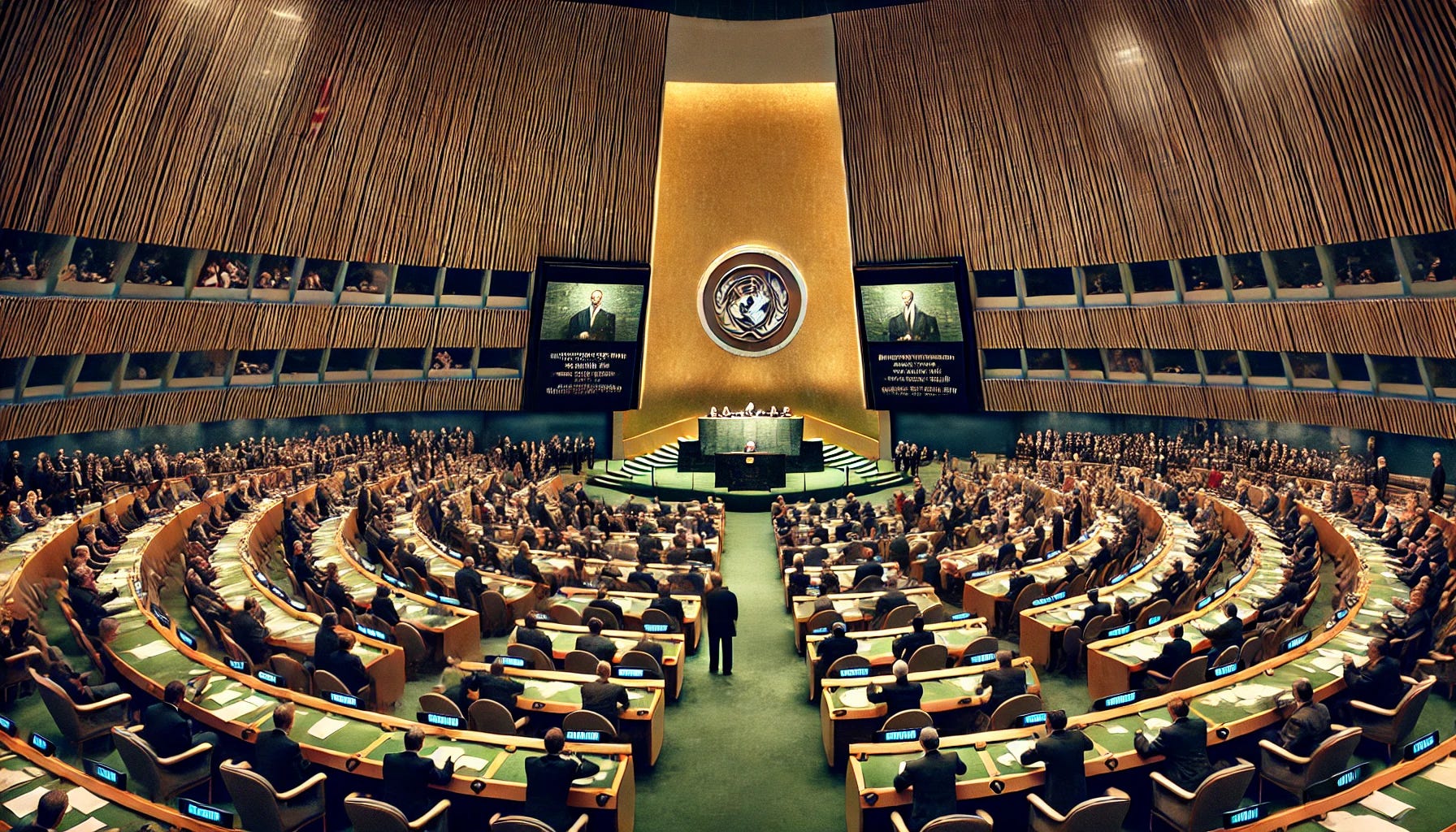
The United Nations Model: Governance by Enumerating Rights
The Universal Declaration of Human Rights (1948) is often cited as a milestone, but its underlying philosophy is flawed. It is not a bill of rights in the American sense which constrains power. It is a bill of entitlements which expands power.
Rights Invented by Committee
Instead of acknowledging rights as pre-existing, the U.N. lists them as if they were items on a policy menu. If they can be listed, they can be unlisted. If they can be granted, they can be revoked.
Entitlements Masquerading as Rights
The U.N. declares “rights” to education, medical treatment, housing, leisure, work, favorable conditions, paid holidays. These are not rights — they are distributions, and distributions require coercion. Someone must be forced to provide them. That is not liberty; it is managed dependency.
Silence Becomes Erasure
What the U.N. does not list — rights to bear arms, rights to local self-government, rights to limit taxation — vanish into nothingness. If it isn’t on the list, it doesn’t exist.
Conditionality
Every U.N. right is contingent on state and supranational compliance. They are not inalienable; they are fragile permissions. The very structure makes them revocable, mutable, and temporary.
Problems in Practice
If the U.N. model were merely misguided theory, that would be bad enough, but its practice is worse:
Authoritarian Guardians of Rights. The U.N. Human Rights Council has been stacked with regimes that actively violate the very “rights” they claim to enforce. China, Cuba, Venezuela, Saudi Arabia, Eritrea — serial abusers of liberty — have all held seats.
Silence on Tyranny. The U.N. has failed to stop genocides, gulags, and systemic oppression. Resolutions did not save Rwanda, Darfur, or the Uyghurs.
Weaponized Accusations. Authoritarian regimes accuse freer nations while crushing their own citizens.
No Enforcement Against the Strong. When powerful states commit abuses, the U.N. wrings its hands. The “universality” is selective.
This is not universal justice. It is supranational theater. The foxes guard the henhouse, and the bureaucrats applaud.
The European Union Model: From Constitutional Limits to Entitlements
The E.U. shares the same structural flaws, but on a regional scale. We detail seven reasons why the E.U. is an improperly designed governance system:
Consent Without Sovereignty: Citizens may vote in national elections, but the real locus of power, Brussels and the Commission, is insulated from direct accountability.
Enumerated Privileges, Not Enumerated Powers: The E.U. issues “rights” (free movement, harmonized standards), but arrogates powers to itself without explicit citizen consent.
The Commission as Aristocracy: Unelected commissioners issue binding directives that override national legislatures. This is sovereignty displaced.
Illusion of Subsidiarity: While claiming decisions are made at the lowest possible level, in practice, powers centralize in Brussels.
Rights as Leashes: The Charter of Fundamental Rights enumerates entitlements like healthcare and social assistance. These are not liberties preserved by restraint, but benefits conditioned on bureaucratic compliance.
Erosion of National Compacts: Nations joined under promises of cooperation, but found themselves governed by supranational directives that hollow out their constitutional orders.
Managerial Drift: The gravitational pull of the E.U. is always toward more centralization, more harmonization, more rules.
The E.U. is not a federation like the United States, where powers were explicitly enumerated and ratified by citizens. It is a technocratic project, a managerial empire without admitting it is one. This is particularly striking given Europe’s own history. The English Bill of Rights of 1689 enumerated limits on monarchy to protect subjects from arbitrary power, a model much closer to the American Bill of Rights.
By contrast, the E.U.’s Charter of Fundamental Rights enumerates entitlements, centralizing authority rather than restraining it. The irony is that the E.U. claims continuity with European tradition while in fact inverting it. The United Kingdom’s decision to withdraw, formally known as Brexit or the exercise of Article 50 of the Treaty on European Union, underscored this tension, reasserting the primacy of national sovereignty over supranational control.
These Systems Are Improper By Design
Supranational governance systems fail for structural reasons:
No Compact with Citizens. Legitimacy comes from ratification by the governed. Neither the U.N. nor the E.U. has this. They are compacts among states, not citizens.
No Enumerated Powers Principle. Both systems assume open-ended authority, justified by goals (peace, unity, prosperity) rather than by limited delegations. While they do operate through compacts among willing nations, those compacts transfer broad competencies upward without clear boundaries, meaning powers accumulate rather than remain explicitly enumerated.
Rights as Entitlements. Both systems enumerate positive entitlements as “rights,” conditioning liberty on bureaucratic provision. This redefines citizens as dependents.
Centralization Bias. Without a structural principle of restraint, power inevitably flows upward, not downward. This is the opposite of federalism.
The American Antidote: Enumerated Powers, Inalienable Rights
The U.S. design remains the clearest model of proper governance system design:
Powers and constraints are enumerated. Authority is explicit, narrow, and revocable.
Rights are presumed. They do not need to be listed, because they exist beyond government.
Government is a creature of contract. It does not create humanity or bestow dignity; it only secures what already exists.
The Tenth Amendment captures this principle:
“The powers not delegated to the United States by the Constitution, nor prohibited by it to the States, are reserved to the States respectively, or to the people.”
This is humility in governance, recognizing that sovereignty rests permanently in the people, and that government is their servant, not their master.
The Next Stage: United States Protocol
United States Protocol takes these foundational principles and renders them computationally:
Enumerated Powers Registry. Only listed powers can ever execute; everything else is structurally impossible.
Implied Powers Helper Functions. Narrow, traceable, always tied to an enumerated anchor.
Rights Untouched. Rights are never listed, never circumscribed, never dependent on the protocol. They are presumed infinite and inalienable.
Consent Proven. Citizen sovereignty becomes real-time and cryptographic, not rhetorical, not ceremonial.
Immutable Anchoring. Legitimacy is bound to public cryptographic immutability, not supranational decrees.
United States Protocol is not a new idea of rights. It is the old American idea, made unbreakable.
More importantly, United States Protocol is portable. It can extend beyond the United States to any federation, confederation, or international association that wishes to ground sovereignty in its citizens rather than in committees. Where the U.N. and E.U. build power upward, United States Protocol enables power to ascend upward from citizens to local, regional, national and even international structures, always bound by enumerated powers and inalienable rights.
Two Directions for Humanity
We face two competing models:
The supranational approach. Rights enumerated, privileges managed, power concentrated in committees. A model of population management.
The American approach, reborn in United States Protocol. Rights unalienable, powers enumerated, sovereignty ascending from the people. A model of liberty and accountability.
It is a civilizational choice. Do we want to be managed subjects, or sovereign individuals? Do we want our freedoms written down as temporary permissions, or secured as permanent, unalterable rights?
The Enduring Truth
The lesson of history is clear. When rights are treated as privileges, they disappear. When power is unconstrained, it grows. When sovereignty is managed from above, liberty withers.
United States Protocol is the continuation of the American founding: inalienable rights, enumerated powers, sovereignty anchored in the people themselves, and extendable to the international level without ever losing its grounding in citizens.
Your rights were never theirs to give, and never theirs to take away.
At United States Lab, we are implementing the United States Constitution’s compound republic governance model in web3. If you are interested in this research, please follow our R&D work.