


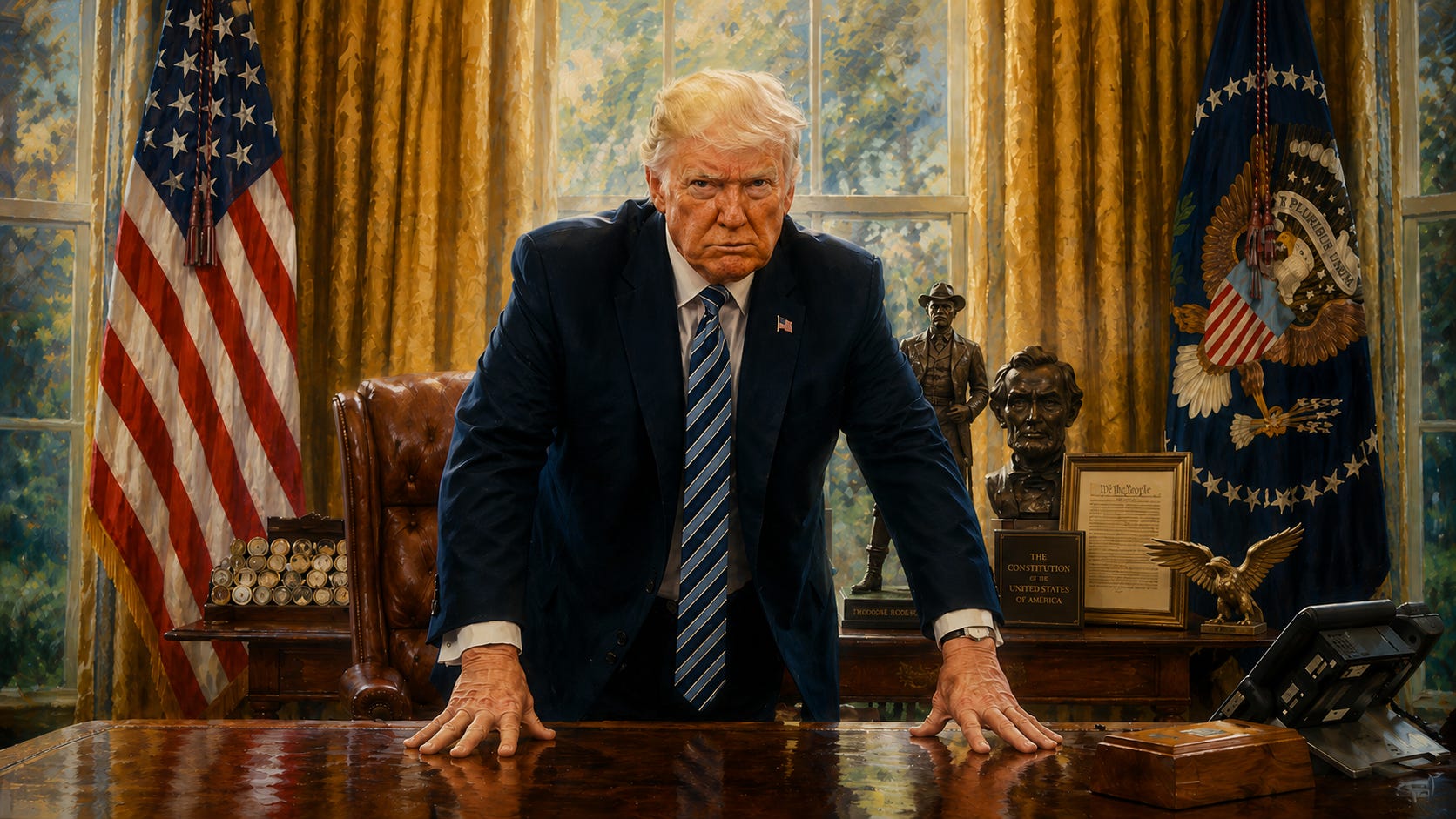
The Article II Execution Mandate
The President’s duty of faithful execution is one of the Constitution’s clearest operational commands and one of its most difficult duties to perform at scale. Article II, Section 3’s Take Care Clause provides:
“He shall from time to time give to the Congress Information of the State of the Union, and recommend to their Consideration such Measures as he shall judge necessary and expedient; he may, on extraordinary Occasions, convene both Houses, or either of them, and in Case of Disagreement between them, with Respect to the Time of Adjournment, he may adjourn them to such Time as he shall think proper; he shall receive Ambassadors and other public Ministers; he shall take Care that the Laws be faithfully executed, and shall Commission all the Officers of the United States.”
This clause places the President at the head of the national execution function. Congress legislates. Courts adjudicate. The President is charged with seeing that the laws move from enactment into lawful operation. Yet the clause does not give the President a perfect instrument panel, a complete execution ledger, or a real-time map of administrative compliance. It gives a duty, while the practical means of performance are mediated through officers, departments, agencies, appropriations, regulations, litigation, reporting structures, civil-service systems, contractors, records, and institutional habits.
That distinction matters. The President may be constitutionally responsible for faithful execution while relying on tools that are often indirect, slow, incomplete, unreliable, and exploitable. The constitutional duty is clear; the administrative runtime is vast. The President can appoint, remove where law allows, supervise, issue executive orders, direct cabinet officers, reorganize priorities, request appropriations, communicate with Congress, and enforce law through departments. These are meaningful tools, but they do not automatically prove that lawful instructions were carried through the machinery of government as intended.
United States Protocol supplies the controlling frame for the Take Care duty. Faithful execution is the ordered operation of lawful authority through office, rank, commission, custody, recognition, signature, seal, department, and accountable return. The President bears the supreme responsibility that the laws be faithfully executed, and that responsibility becomes operative through the protocolized structure of the United States. Officers act within recognized stations, instruments issue through proper forms, and execution proceeds according to the official order that gives public acts their authority as acts of the United States.
